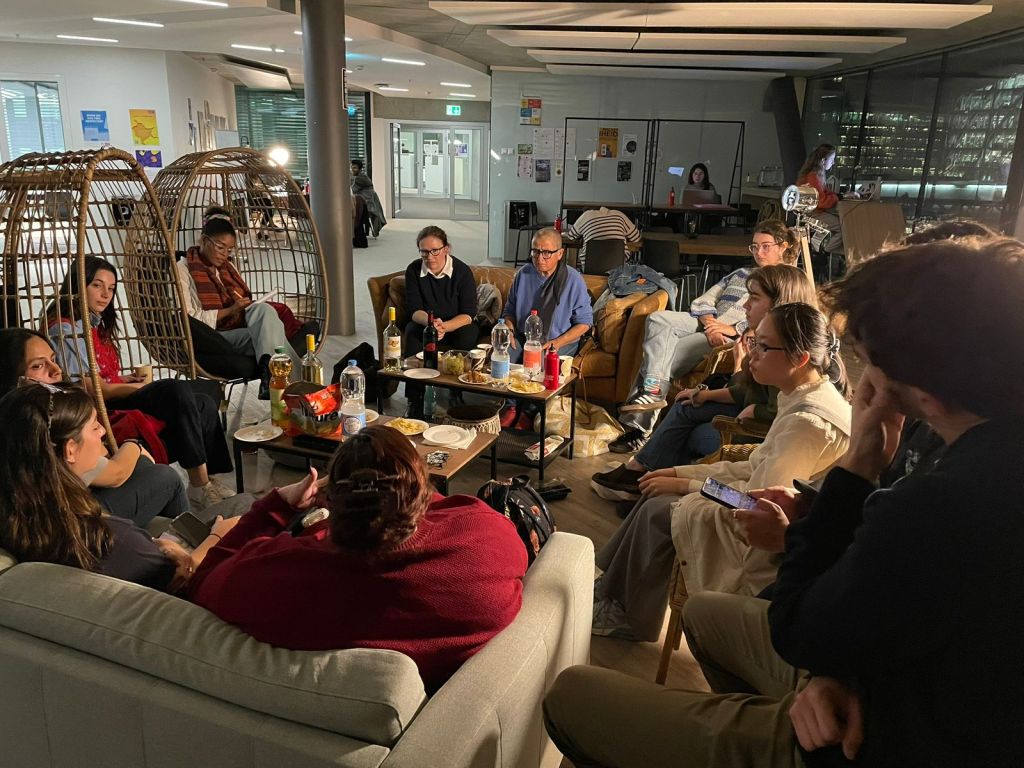
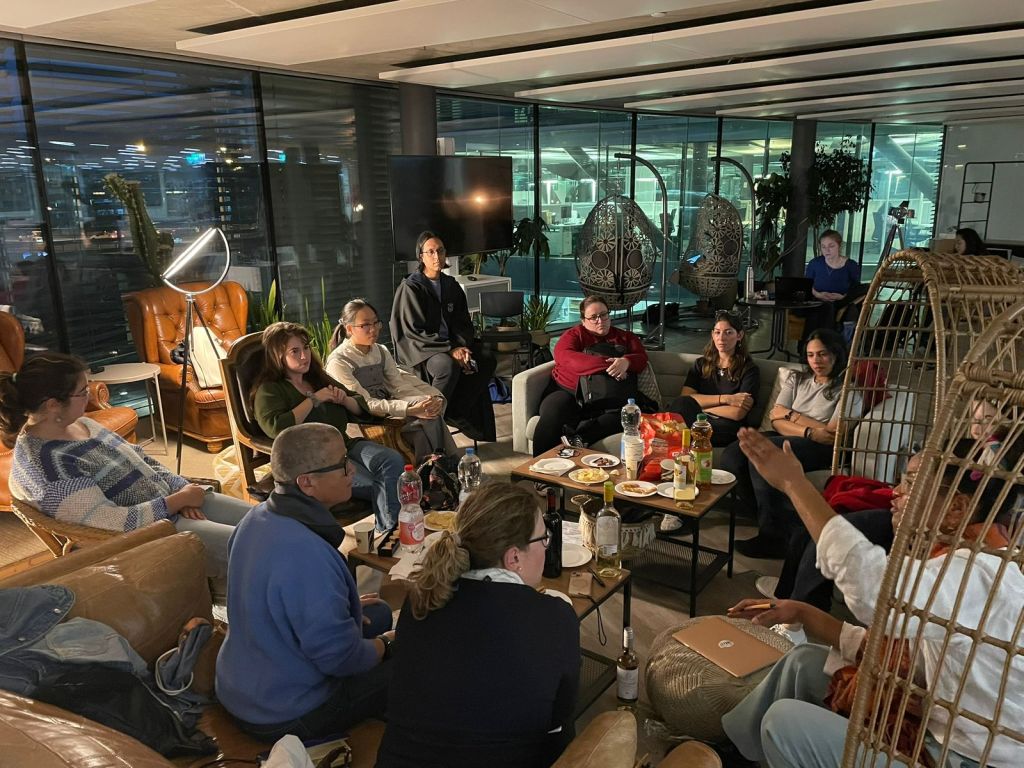
On October 30th, 2025, we facilitated an interactive dialogue together with students of the Geneva Graduate Institute, in partnership with the Peacebuilding Initiative (PBI), and the Geneva Institute Student Association (GISA). The topic we discussed was “Building Intercultural Relationships: an interactive dialogue on navigating belonging and identity.”
Below, we publish some themes that emerged from our discussion, as well as photos (above) and the notes here of Aryan Bajpai, PBI Director of Logistics and the 2nd year MA student, who generously shared his insightful points with us.
Theme 1. Discomfort is an important part of learning and growth. But when it comes down to practice, it can be quite disorienting. What may be helpful during these moments is the following:
- Knowing oneself and the environment, as well as connection to the own power and awareness of the own impact on others or the whole field/community.
- Vulnerability can be an ally, as showing one’s own vulnerability and acknowledging pain and disturbance on the other side is humane; it can shape the conversation, and potentially deepen the relationships.
- Disturbing with awareness and care can break through the close-mindedness. Sometimes, small comments or questions done in a kind way can open new worlds to close-minded people and groups.
- Curiosity can transform discomfort, and a learning spirit can work magic, turning any discomfort into a great and exciting learning experience.
Theme 2. Being flexible with one’s different identities can bring fluidity in relationships with the outer world. It allows one to be freer to bring different aspects of oneself to different environments. At the same time, it is important to be aware that the level of freedom and flexibility comes with privilege. Race, gender, age, class, and other differences play an important role, as not everyone can be so free and flexible in any given context.
Theme 3. Systemic issues need a community to come together and work on updating and evolving the system. For example, when applying for a job in Geneva, one may tend to think of one’s own psychology in case of denial. Even though one can always work on oneself and learn a lot from any situation, we thought that some topics, like job application and difficulties connected to it in a certain setting, could be systemic, in other words, belonged to the whole system, and needed a community to address together.
Theme 4. Awareness gives freedom of choice. Some of us shared a sense of being an outsider, whether in the local or global communities. At the same time, we discussed the advantages of being an outsider, such as bringing fresh ideas and enlivening a group with new information. Being aware of the own gifts can shift one’s perspective and bring more freedom for choice and agency.
Theme 5. Peace work starts with the self. We discussed how sometimes peace work on global issues was easier than peace work within oneself. However, we also discussed how peace work begins with the self and how it can empower one to be more effective and impactful in addressing global issues and changing the system. Some of us felt that this work with the self was a truly global contribution towards peace.
 livingtogether.world
Leave a comment